JERRY — THE SNOW CONE VENDOR WHO TAUGHT ME ABOUT PURPOSE
On community, care, and the kind of entrepreneurship not found in a business book.
Close your eyes for a second and come with me.
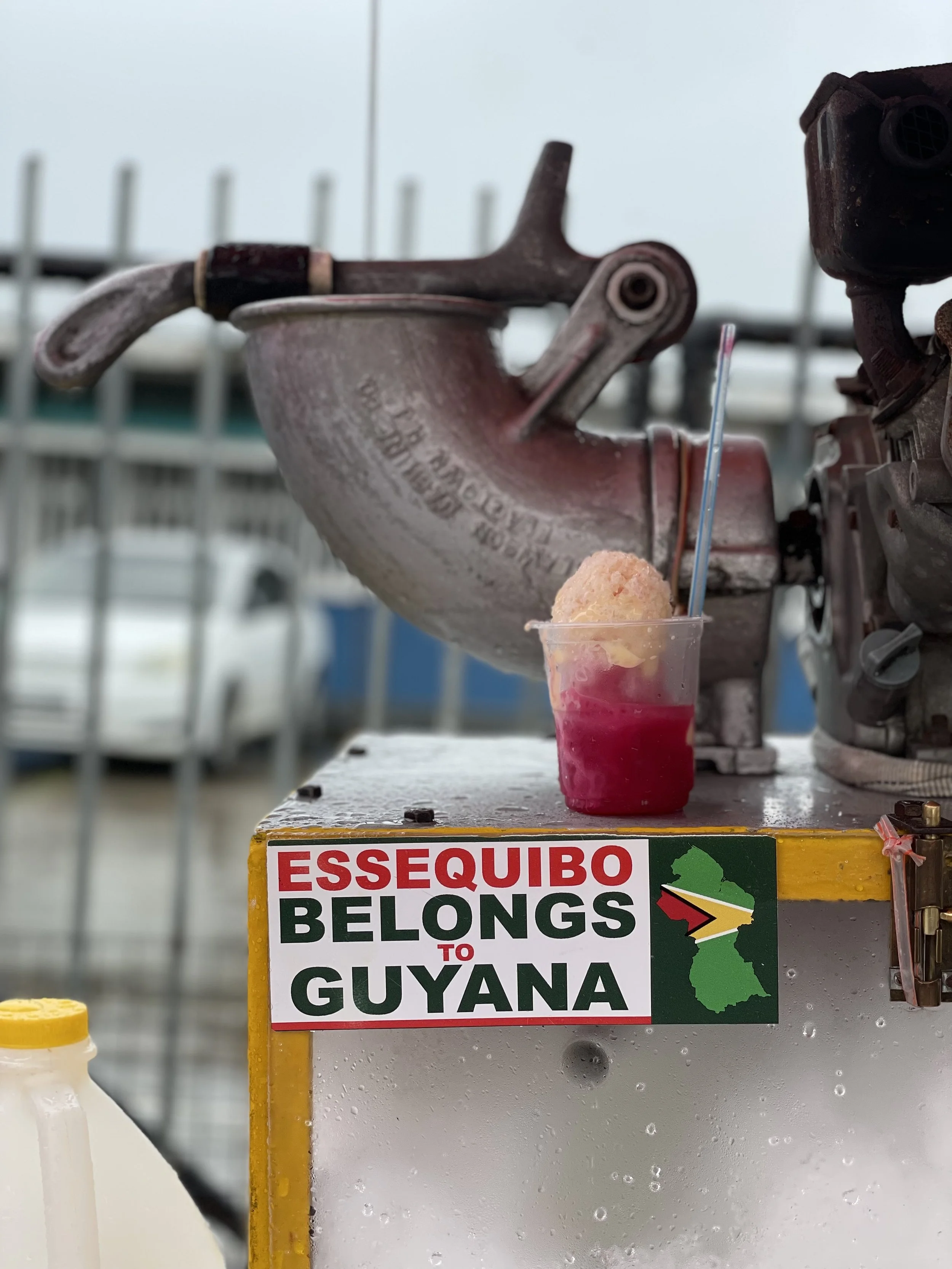
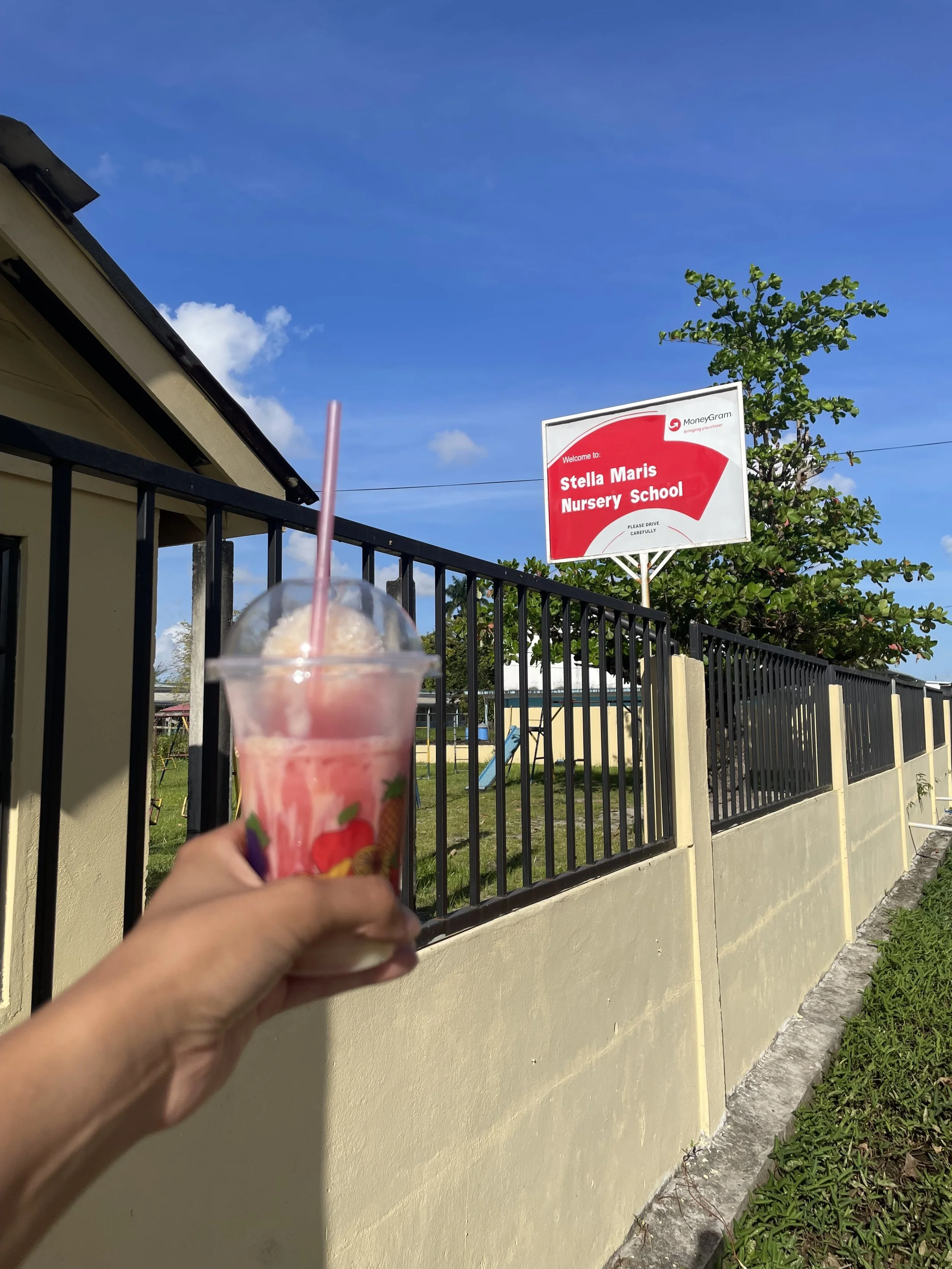
It's a hot Georgetown afternoon. You're in the Stella Maris schoolyard, uniform wrinkled from a full day, sand in your hair from the trip down field, and somewhere between the gleeful screams of children on the monkey bars and the sprint to the front gate to see if your mother arrived for pickup, you catch a glimpse of that snow cone cart and already know your next move. You line up and when it's your turn, he hands you a snow cone piled high, bright red syrup drizzled over finely crushed ice, and if you were in the mood, a slow stream of condensed milk on top. Sweet, cold, and perfect in a way that only a child from the Caribbean truly understands.
That's the memory, and I've been carrying it for thirty plus years.
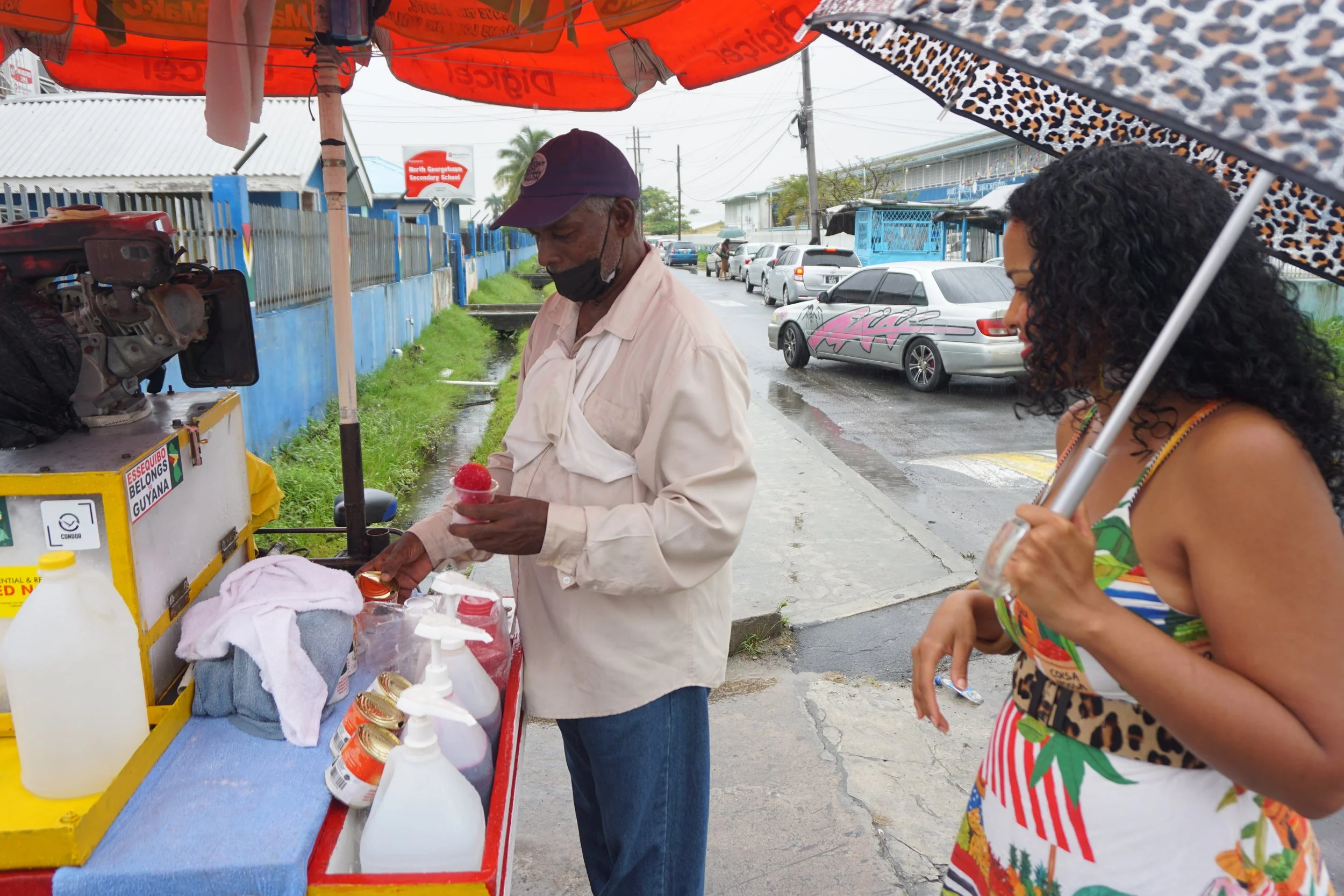
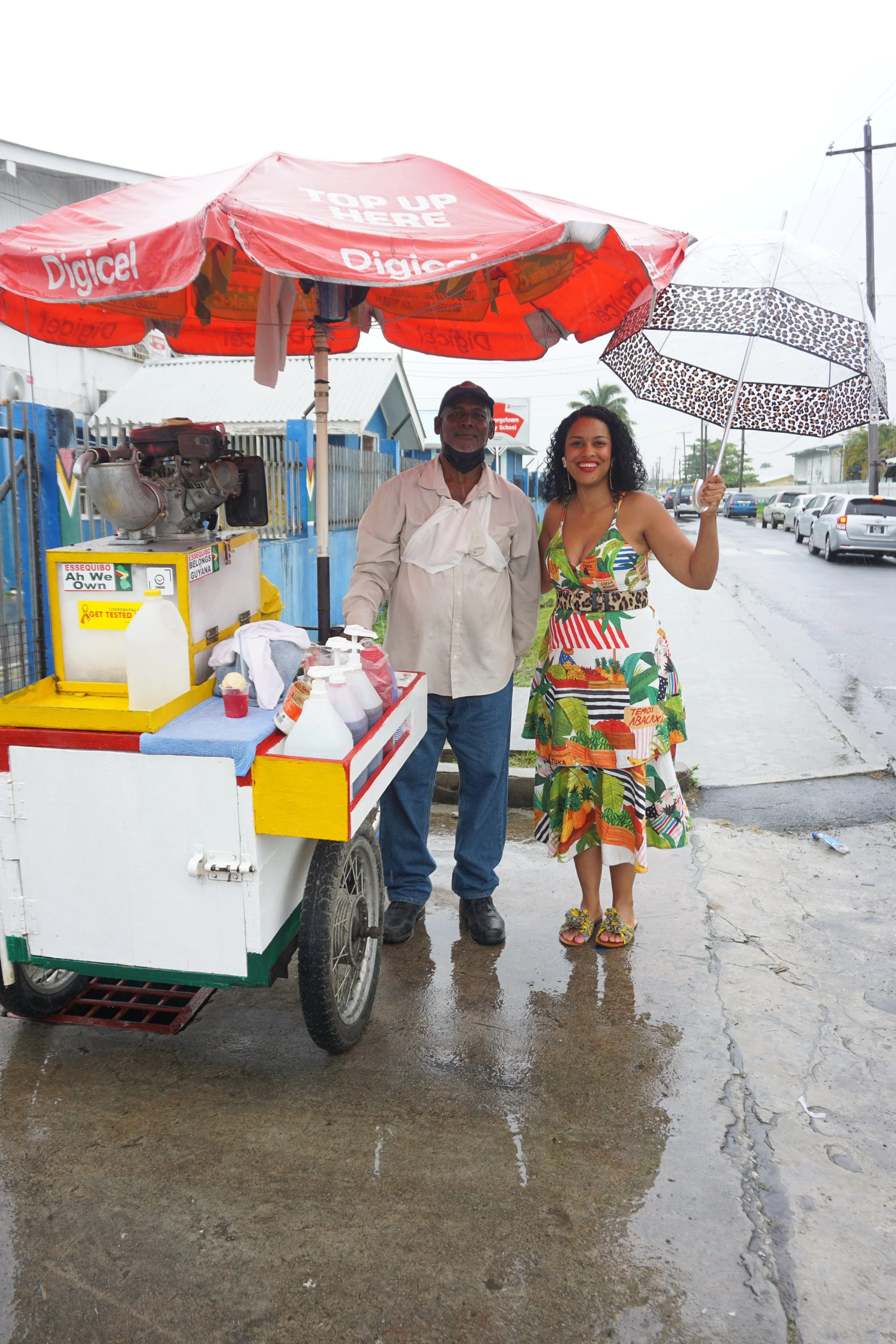
I was standing on Woolford Avenue, not far from my beloved Stella Maris Primary School on a rainy afternoon in 2022 when I finally got to say all of this out loud. I'd come back home and heard that Jerry Maselmony was still there, still at it, still pushing that cart, and I needed to see him. Not only for a delectable snow cone from my childhood, but because I had started my own business a couple of years before and something kept pulling me back to him as a reference point. Something he'd given all of us without us even realizing it.
We stood there in the rain beneath his red and white Digicel umbrella, dressed with bunting of miniature Golden Arrowheads, and I pressed record.

A Business Born From Necessity, Built From Love
Jerry didn't launch his snow cone business with a pitch deck or an extensive business plan. He'll tell you that plainly, no fuss about it.
"I had nothing to do, and a family to support. I got the idea from a friend. That's it."
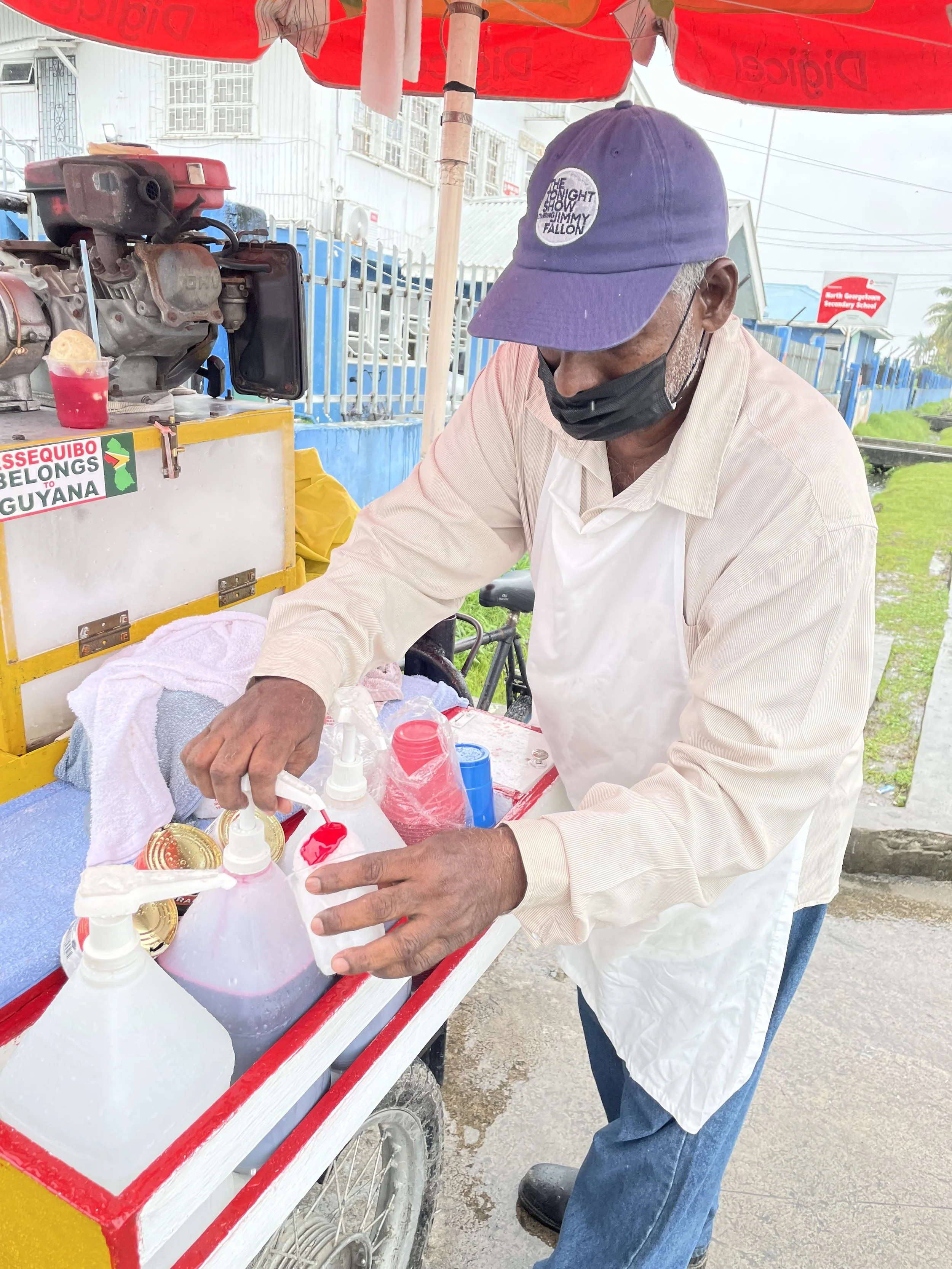
That's the whole origin story. In 1987, after leaving his job as a sales clerk at BATA shoe store, he made a decision - a cart, a block of ice, and the commitment to show up. He never looked back.
What makes his story remarkable isn't just about how it started. It's that it never stopped. Decades in, he's still there. The cart has been rebuilt piece by piece over the years, new box, new engine, but the frame is the original. There's something in there that I keep coming back to; the foundation of it never changed. When I asked what kept him going through the slow days, through the years, through everything life throws, he didn't miss a beat.
"I fall in love with it. Seeing all the little children, from when they were small, like you were, and then watching them grow up and become adults. It gives me a great feeling."
That's not a hustle, that's a calling, and as it turns out, a calling has a way of building something much deeper than a business, it builds a community.
The Village Around the Schoolyard
For those of us who grew up at Stella Maris, Jerry was woven into the very essence of the school. Not a teacher, not staff, but as present and as necessary as either. He kept order, and I mean that in the truest sense. When you came to Jerry's cart, you stood in line and waited your turn.
"Regardless of how much you're spending," he told me, "everyone waits. That's just how it is."
It sounds simple but the lesson, that fairness and respect for others isn't negotiable, is one worth learning. We got it standing in a schoolyard queue for snow cones. Then there was the other side of him, the softness underneath the firmness.
When the afternoon wound down and the teachers had gone home and some of us were still in the yard, still waiting on parents who were running behind, Jerry was usually the last adult there. Watching, making sure no child was just left alone. He'd keep an eye on everyone and stayed until he couldn't stay anymore, and when the ice was nearly gone and it was time to head home, he didn't just pack it away.
Jerry would open that cart one last time and scoop out what was left; small, cold handfuls, pressing them into the tiny outstretched hands of whoever was still there. No syrup, no cup or paper cone. Just ice, freely given, on a hot afternoon and for a child who maybe couldn't always afford a snow cone that day, that little bit of cold in the palm of your hand was pure joy. It was being seen. It was enough.
Those are different times now, as Jerry himself said quietly when I brought it up. But the instinct behind it, to give what you have left, to make sure no one walks away with nothing, that never left him. That instinct, I've come to understand, is really just another word for something deeper.
What We Mean When We Say "Servitude"
I've been thinking a lot lately about the word servitude, not in the heavy, historical sense, but in the quieter, truer sense. The idea that your purpose isn't really about you. That whatever you're building, whatever you're doing, it's in service of someone else. That's where the meaning lives.
Jerry embodies that completely, and without any performance around it.That instinct came straight from his heart.
“I never gave a child something with the intention of getting something back,” he told me. “That never even crossed my mind.”
He told me about a young woman, a boutique owner now, grown and established, who came back to find him one day. She didn't come to buy a snow cone. She came to give him something. A gift. Just because. When he asked her why, she told him that when she was a little girl at Stella Maris, she used to hold out her hand at the end of the day, and she always got something. She never forgot it. She carried it all the way into womanhood and came back to say so.
Jerry laughed telling me that story. This full, real, satisfied laugh. "I should laugh, you know?" he said.
Because he never expected it, he never counted on it. He had poured into us as children because it was simply the right thing to do, and decades later, it was still finding its way back to him — not as a transaction, but as a testimony. That's what real generosity does, it doesn't keep receipts. It just keeps giving, and the return comes in forms you never could have planned for.
“When you do it willingly, with love,” he said, “the money will come. Eventually, the money will come.”
Which brings me to the part of Jerry's story I think about most as a business owner.
The Entrepreneurship Nobody Talks About
I started my own business years ago (creative direction, storytelling through design, accessories, vintage fashion) and like anyone building something from scratch, I know the seasons. The uncertainty and the days when it feels overwhelming and you wonder if you're doing the right thing. In those moments, it's easy to start measuring wrong. To let the metrics or the revenue number become the thing. To forget that none of that was actually why you started.
Jerry has never had that issue. Not once in thirty nine years.
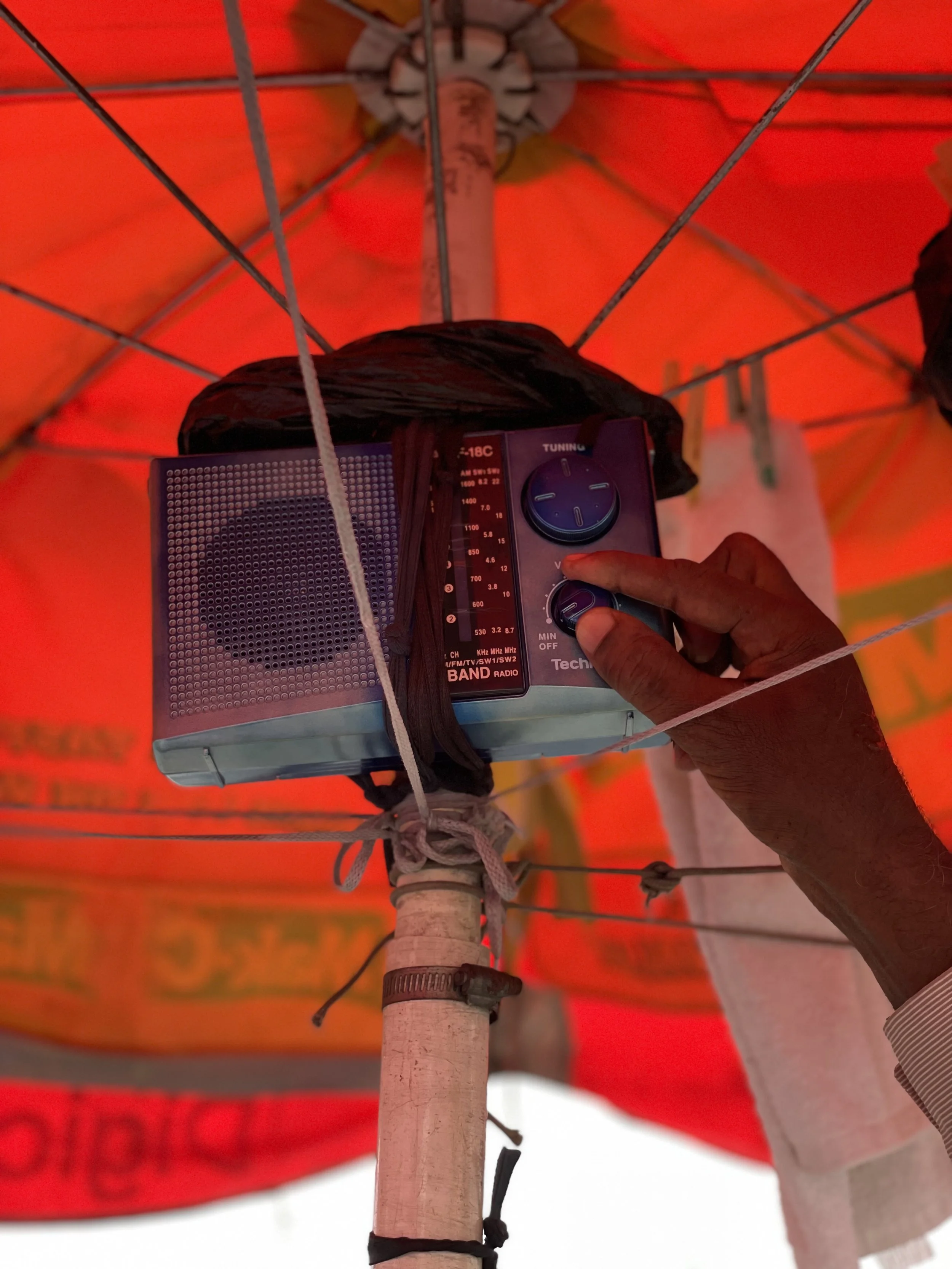
“I shouldn't even say it's work for me,” he told me. “I didn't really work. I got my radio. It's just fun for me now. I just like it.”
He said there are days he doesn't sell much. Slow days, hard days, and he goes back out anyway. Not because someone is making him. Because it's his. Because he loves it. Because when he sees the children's faces light up, that's the whole point — and it's enough.
That is a kind of entrepreneurship we don't celebrate enough. The kind that doesn't need external validation to keep moving. The kind where the work itself is the reward, where the joy of serving someone is built right into the business model.
"It gives me great satisfaction," he said. "Not in the big money. But the joy. I feel satisfied."
Satisfied. Not wealthy, not famous, not viral. Satisfied. People who know what that feels like will tell you, it's rarer and harder to come by than any of those other things. I wanted him to know that the satisfaction was mutual, that what he had given us as children, had stayed.

Giving Flowers
I told Jerry why I was there with a recording going — that I have a blog, a platform, that I wanted to write his story down so other people could be moved by it, the way I was. He listened, and then I said what I really came to say.
We remember you. The impact you made on us as children coming up, you should know it. If nobody ever told you, I'm telling you now.
They say give people their flowers while they're here to receive them. Jerry deserves his, all of them. He's not a corporation or a brand. He’s an entrepreneur who runs a snow cone cart with an original frame and a rebuilt engine, outside the schoolyards in Georgetown, Guyana, and he has touched more lives than he will probably ever fully know.
"The amount of lives you have touched," I told him, "you might not even be aware of."
He smiled at that, and then pulled up an old photograph he carried with him, kept just for him on his phone. In it, he looked like the Jerry I fondly recalled from my childhood; young, dark-haired, smiling. A whole life of showing up already behind him even then. The image of a man who had found his purpose early and never let it go.

What Jerry Taught Me
Purpose doesn't always arrive with a press release. Sometimes it looks like a cart at the school gate. Sometimes it sounds like your name called out over the noise of a yard full of children. Sometimes it feels like a small, cold handful of ice pressed into your palm on a hot afternoon when someone thought to see you, even when they didn't have to.
The lesson is simple, even if living it isn't, be like Jerry. Find your version of what he uncovered across thirty plus years of simply showing up. The thing you do that lights you up and lights up the people around you. The work that feels like service more than sacrifice. The giving you do without a ledger.
We need more of that. More people who build from love and stay the course when it gets slow. More generosity without expectation. More community that is lived, not just posted about. Jerry taught me all of that years ago, one snow cone at a time. I'm just finally finding the words to say it back to him.
After all these years — you earned it, Jerry. Thank you. 💐
If this resonated with you, share it with someone who needs the reminder. And if you grew up at Stella Maris, or with Jerry in your life, drop your favorite memory in the comments. Let's continue to give him his flowers.